
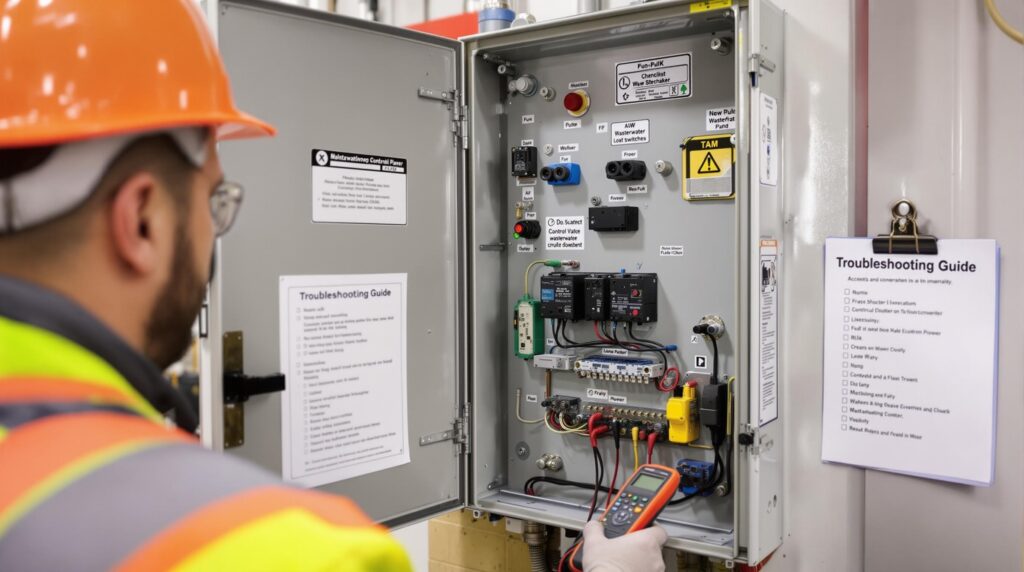
Wastewater control panels are the nerve centers of pumping systems, providing the automation and monitoring needed to keep operations running smoothly. When a control panel malfunctions, it can lead to pump failure, system downtime, and costly repairs. Understanding how to identify and address common issues is key to maintaining an efficient wastewater management system. At Wastewater Supply, we provide not only high-quality control panels and components, but also the support and expertise to help you troubleshoot when problems arise.
Understanding the Role of the Control Panel
Contents
- 1 Understanding the Role of the Control Panel
- 2 1. Pumps Not Turning On or Off
- 3 2. Frequent Tripping or Overloads
- 4 3. Alarm Conditions with No Apparent Cause
- 5 4. No Power or Partial Panel Function
- 6 5. Intermittent Operation or Erratic Pump Behavior
- 7 Preventative Maintenance Tips
- 8 Need Help Diagnosing a Control Panel Problem?
Wastewater control panels coordinate the operation of pumps, alarms, and sensors in lift stations, sump pits, and treatment facilities. A typical panel includes:
- Motor starters or contactors
- Overload protection
- Float or level sensor connections
- Run indicators and alarms
- Timer relays or programmable logic controllers (PLCs)
When a component inside the panel fails, the consequences can range from nuisance alarms to full system shutdowns. Recognizing the warning signs early can help prevent major disruptions.
1. Pumps Not Turning On or Off
This is one of the most common issues and can result from several causes:
- Faulty Float Switch: The float switch may be stuck, misaligned, or worn out. Check for physical obstructions or water damage.
- Failed Relay or Contactor: If the relay isn’t triggering, the pump won’t receive the command to operate. Visual inspection and testing with a multimeter can confirm continuity.
- Wiring Issues: Loose or corroded terminals can interrupt signals. Ensure all wires are properly seated and terminals are clean and secure.
If replacing the float switch or tightening connections doesn’t resolve the issue, the problem could lie within the control logic itself, especially in panels using PLCs or timers.
2. Frequent Tripping or Overloads
When a wastewater control panel trips regularly, it’s often due to electrical overloads or short circuits. Possible causes include:
- Clogged Pump or Impeller: Mechanical resistance can cause the motor to draw excess current.
- Incorrect Overload Settings: Overload protection devices must be rated properly for the motor amperage.
- Wiring Faults: Ground faults or damaged insulation can create shorts that trigger protective devices.
Check the motor load against nameplate ratings, and inspect all panel wiring for signs of damage or overheating. Resetting overloads without addressing the root cause will only lead to repeat failures.
3. Alarm Conditions with No Apparent Cause
Many panels include high-water, low-level, or seal fail alarms. If an alarm is triggered but no abnormal condition is present, consider the following:
- Sensor Calibration: Level sensors may need recalibration to reflect accurate readings.
- Debris or Grease Buildup: Float switches or level transducers may be hindered by accumulation, leading to false signals.
- Moisture Intrusion: Water entering the panel or float cable can cause false alarms or signal shorts.
Ensure all sensor wiring is sealed and weather-resistant. Clean and inspect floats and probes regularly to maintain accurate operation.
4. No Power or Partial Panel Function
If the entire panel or certain components stop functioning, start with these steps:
- Check Incoming Voltage: Use a multimeter to verify that the panel is receiving correct voltage.
- Inspect Fuses and Breakers: Blown fuses or tripped breakers are common culprits and may indicate downstream faults.
- Look for Burnt or Damaged Components: A burned contactor or scorched wire insulation can indicate overloads or power surges.
In the event of repeated power issues, a surge protector or line conditioner may be needed to stabilize input voltage, especially in industrial or remote applications.
5. Intermittent Operation or Erratic Pump Behavior
Unpredictable pump starts and stops can be particularly frustrating. They may be caused by:
- Corroded Terminals: Poor electrical connections can create intermittent signals.
- Defective Timer or PLC Logic: If the control logic becomes corrupted or malfunctions, the system may behave inconsistently.
- Signal Interference: Nearby equipment can cause electromagnetic interference (EMI), especially if wiring isn’t properly shielded.
Routine inspections, testing with diagnostic tools, and proper panel grounding can go a long way in stabilizing performance.
Preventative Maintenance Tips
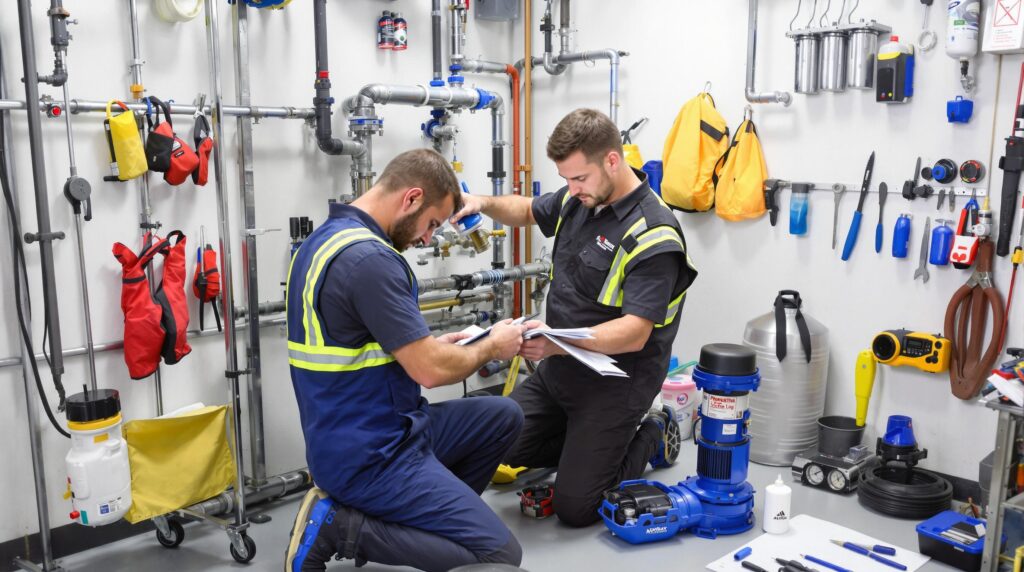
Most control panel issues can be prevented with routine maintenance. We recommend the following schedule:
- Inspect and clean control panels quarterly
- Test float switches and level sensors monthly
- Tighten terminals and check for corrosion regularly
- Review alarm history logs to identify trends or repeat issues
Preventative care extends equipment life, reduces downtime, and helps you catch problems before they become emergencies.
Need Help Diagnosing a Control Panel Problem?
When your control panel is acting up and troubleshooting isn’t resolving the issue, it may be time for expert support. Contact us today to speak with a wastewater system specialist. Whether you need replacement components, technical advice, or a custom panel solution, our team at Wastewater Supply is here to help.
About Wastewater Supply: Wastewater Supply offers industry-leading pumps, control panels, fiberglass basins, and OEM replacement parts. With decades of experience supporting municipal, commercial, and industrial fluid handling systems, our mission is to keep your operations running efficiently and reliably.